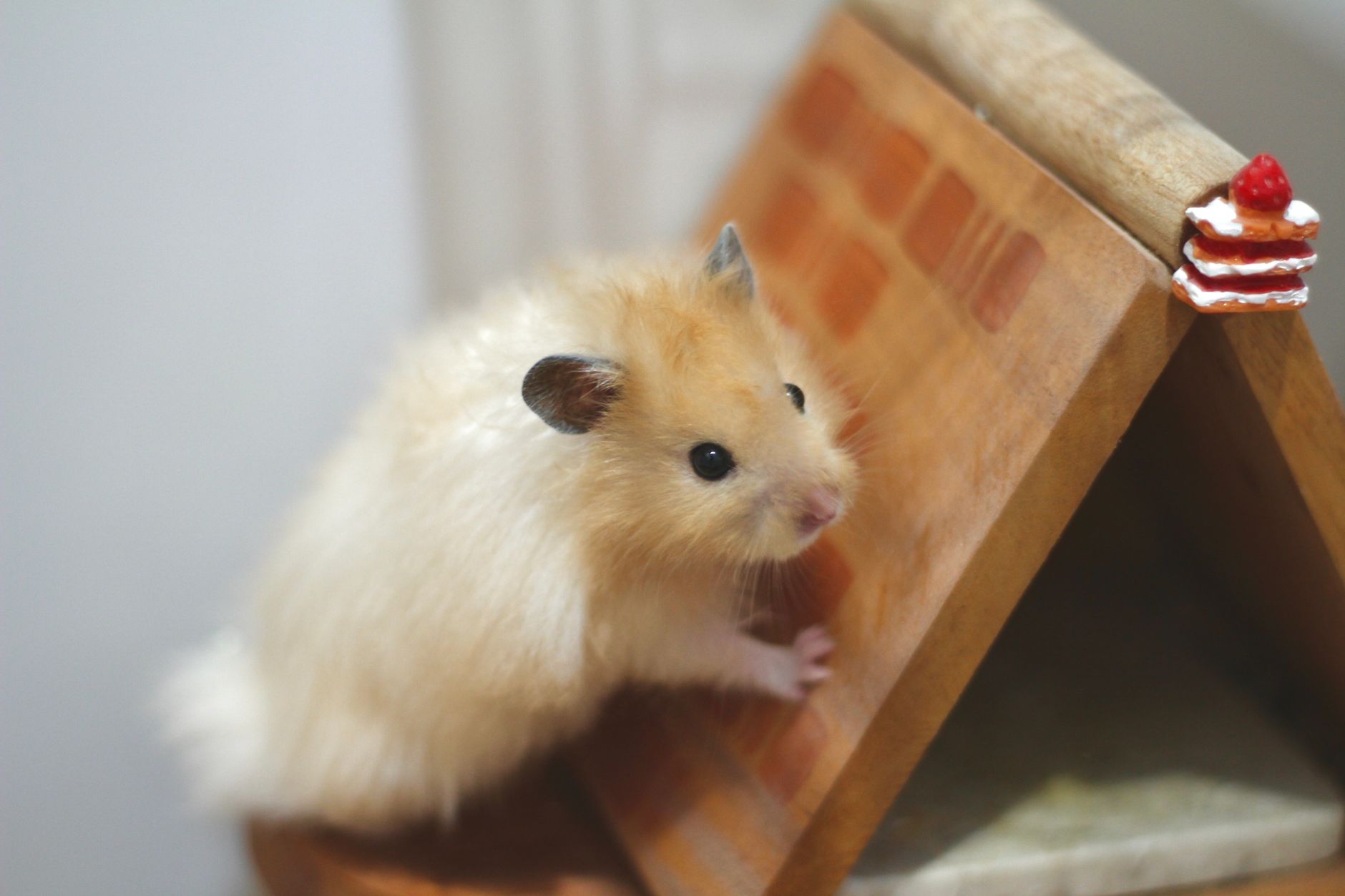
Sweet Hamster Days: A Quiet Escape in Gaming
There’s something quietly magical about games that don’t ask you to save the world, defeat a boss, or even win. Instead, they invite you to simply exist in a moment of quiet comfort. That’s the promise of Sweet Hamster Days, an FMV title where you play as a small hamster living with three doting Japanese sisters. No combat, no timers, no fail states — just gentle interactions, soft laughter, and the occasional carrot offered with a smile. It’s the kind of game that feels less like entertainment and more like a digital hug.
What makes it especially fascinating isn’t just its premise, but where it came from. The creator didn’t dream this up in a vacuum. It was born from two very different places: years spent inside a mascot, somewhat chaotic energy of Grand Theft Auto 5.
From Mascot Work and a Love for GTA 5
The path to Sweet Hamster Days began not in a game studio, but in a fur suit. For years, the developer performed as a costumed mascot at theme parks and promotional events. It wasn’t glamorous. Long hours in thick, non-breathable suits, limited visibility, and the constant need to stay in character — waving, dancing, posing for photos — took a physical and emotional toll. But amid the discomfort, there were unexpected moments of connection.
Children would run up and hug the mascot without hesitation. Strangers would wave or smile, not knowing who was inside, but responding to the gesture anyway. Over time, the developer began to notice how powerful simple, non-verbal affection could be. There was no need for words when a hug or a high-five conveyed care. That feeling — of being accepted and looked after purely for existing — stuck with them long after they hung up the suit for good.
It planted a seed: what if a game could recreate that sensation? Not through achievement or challenge, but through the quiet reassurance of being cared for? The idea of a small creature, utterly dependent and endlessly cute, being doted on by others began to take shape.
Life Inside the Suit
Before making games, the developer spent several years performing as a costumed mascot at theme parks and promotional events. It wasn’t glamorous. Long hours in thick, non-breathable suits, limited visibility, and the constant need to stay in character — waving, dancing, posing for photos — took a physical and emotional toll. But amid the discomfort, there were unexpected moments of connection.
Children would run up and hug the mascot without hesitation. Strangers would wave or smile, not knowing who was inside, but responding to the gesture anyway. Over time, the developer began to notice how powerful simple, non-verbal affection could be. There was no need for words when a hug or a high-five conveyed care. That feeling — of being accepted and looked after purely for existing — stuck with them long after they hung up the suit for good.
It planted a seed: what if a game could recreate that sensation? Not through achievement or challenge, but through the quiet reassurance of being cared for? The idea of a small creature, utterly dependent and endlessly cute, being doted on by others began to take shape.
Why GTA 5? It’s Not What You Think
You might expect the influence of Grand Theft Auto 5 to show up in driving mechanics or open-world chaos. But here, it’s subtler — and far more interesting. The developer has spoken openly about admiring GTA 5 not for its crime sprees, but for its astonishing attention to ambient detail.
They’d spend hours just walking around Los Santos, watching NPCs go about their lives. A street musician tuning his guitar. A couple arguing near a vineyard. A dog chasing its tail in the shade of a parked car. None of it was essential to the plot, yet it made the world feel lived-in, breathing. That dedication to background life — the idea that a world can feel real even when you’re not the hero — left a deep impression.
In Sweet Hamster Days, that philosophy translates into the sisters’ routines. One might be folding laundry while humming. Another practices piano off-screen, the notes drifting through the door. The third might glance up from her book to check if the hamster’s water bottle needs refilling. These aren’t scripted events tied to progress. They’re ambient moments, designed to make the space feel authentic, even if you’re just a small rodent in a cage.
The game doesn’t simulate a city. It simulates a household. And like GTA 5, it finds meaning in the ordinary.
The FMV Choice: Real Faces, Real Warmth
Choosing full-motion video wasn’t just a nostalgic nod to 90s gaming. It was a deliberate effort to capture genuine human expression. The sisters aren’t animated characters. They’re real people, filmed in natural lighting, reacting to the hamster’s presence with unscripted warmth.
There’s a scene where one sister gently taps the glass of the enclosure, smiling as the hamster investigates. Another offers a leaf of lettuce, waiting patiently to see if it’ll be taken. These moments weren’t heavily directed. The developers encouraged the actors to respond naturally, treating the hamster (a real one, during filming) as a quiet presence in the room.
The result is something rare in gaming: a sense of spontaneity. You never quite know what the sisters will do next. Will they sing? Will they argue softly over who gets to hold the hamster today? Will they just sit in silence, reading, while the hamster naps in a sunbeam? It’s this unpredictability, rooted in real human behavior, that makes the care feel authentic rather than programmed.
A Game About Being, Not Doing
Sweet Hamster Days resists easy categorization. It’s not a visual novel, despite the FMV format. It’s not a pet simulator, because you don’t manage hunger or hygiene. The developers call it a “being-taken-care-of adventure game” — a phrase that sounds awkward at first, but slowly makes sense.
There’s no inventory to manage, no dialogue trees to navigate, no failure condition. Your role is simply to be present. To observe. To accept the care offered, without needing to earn it. In a gaming landscape often dominated by mastery and competition, that’s a radical act of vulnerability.
It asks players to sit with discomfort — not the kind from danger or difficulty, but the kind that comes from receiving kindness without reciprocation. Can you accept being looked after, even if you have nothing to give in return? For some, that’s the hardest part of the game.
Quiet Games in a Loud World
Titles like Sweet Hamster Days are part of a growing trend: games that prioritize atmosphere, emotion, and stillness over action. They don’t shout for attention. They whisper. And in doing so, they offer something increasingly rare — a space to breathe.
Whether it’s tending a garden in A Short Hike, sharing tea in Venba, or simply watching rain fall in The Longing, these games remind us that play doesn’t always have to mean struggle. Sometimes, it’s just about letting yourself be held, even if only by pixels and light.
The developer’s journey — from mascot suit to game creator — feels like a full circle. Years spent bringing joy to others, hidden beneath fur and foam, now translated into a game where the player is the one receiving quiet, unwavering affection. It’s not loud. It’s not flashy. But for anyone who’s ever needed a moment of peace, it’s a quiet kind of magic.