Fading Echo Review: A Hauntingly Beautiful Journey Through Memory
There’s something special about games that don’t shout for your attention. Fading Echo doesn’t need flashy trailers or explosive set pieces to make its mark. Instead, it whispers — slowly, deliberately — pulling you into a world where silence speaks louder than any soundtrack. After spending a weekend lost in its corridors of memory and regret, I can say with confidence that this is one of the most emotionally resonant indie titles I’ve played in years.
A Story Told in Fragments
The game follows Elise, a woman returning to her childhood home after her mother’s passing. What begins as a simple task — sorting through belongings in an empty house — quickly unravels into something far deeper. As you explore room by room, objects trigger fragmented memories: a half-finished letter tucked inside a book, a child’s drawing pinned to the fridge, a lullaby hummed faintly from an old music box.
These moments aren’t presented as cutscenes or dialogue-heavy exposition. Instead, they emerge organically through interaction. Pick up a teacup, and you might hear a snippet of conversation from years ago. Open a drawer, and the scent of lavender seems to rise from the screen — not literally, of course, but the way the game uses sound, light, and texture makes it feel that way. The narrative doesn’t hold your hand. It trusts you to piece things together, and that trust makes the revelations hit harder.
What’s impressive is how the game avoids melodrama. There are no villains, no sudden twists for shock value. Just the quiet ache of time passed, of things left unsaid, and the slow realization that we never really know the people we love as well as we think we do.
Puzzles That Serve the Story
You might expect a game like this to be purely atmospheric, but Fading Echo weaves in light puzzles that feel intentional, not tacked on. Most involve manipulating objects in the environment to unlock memories or access new areas. A broken clock needs rewinding not to tell time, but to sync with a recorded voicemail. A jumbled photo album must be rearranged to reveal a hidden message in the background.
None of these challenges are difficult in the traditional sense. You won’t be stuck for hours trying to figure out a logic gate or decipher a cryptic cipher. Instead, the puzzles work like prompts — gentle nudges that encourage you to look closer, to reconsider what you’ve already seen. They reinforce the theme that understanding often comes not from looking forward, but from looking back.
That said, there were a couple of moments where the solution felt slightly obscure, not because it was clever, but because the visual cue was easy to miss in the dim lighting. A little more contrast in those scenes might have helped, though it’s worth noting that the gloom is intentional — it mirrors Elise’s emotional state. So while it occasionally frustrated me, I couldn’t help but appreciate how even the difficulty served the mood.
Sound and Silence as Characters
If the visuals are the game’s language, then sound is its heartbeat. The score is sparse — mostly piano notes held just long enough to feel unresolved, like a breath caught in the throat. But it’s the absence of sound that often does the heaviest lifting. Long stretches of near-silence as you walk down a hallway, the only noise the creak of floorboards underfoot or the distant hum of a refrigerator. Then, suddenly, a fragment of a voice — a laugh, a sigh, a word half-remembered — cuts through the quiet.
Voice acting is minimal but effective. Elise rarely speaks aloud, but when she does, it’s soft, hesitant, as if she’s afraid of breaking the spell. Other voices from the past come through old recordings or imagined conversations, slightly distorted, like memories trying to surface through fog. It’s a clever technique that makes the past feel both present and elusive.
The game also uses directional audio deserves praise. Put on headphones, and you’ll notice how sounds shift subtly as you move — a whisper coming from behind you, a melody fading as you leave a room. It’s not just immersion; it’s emotional manipulation done with exquisite care.
Visual Poetry in Decay
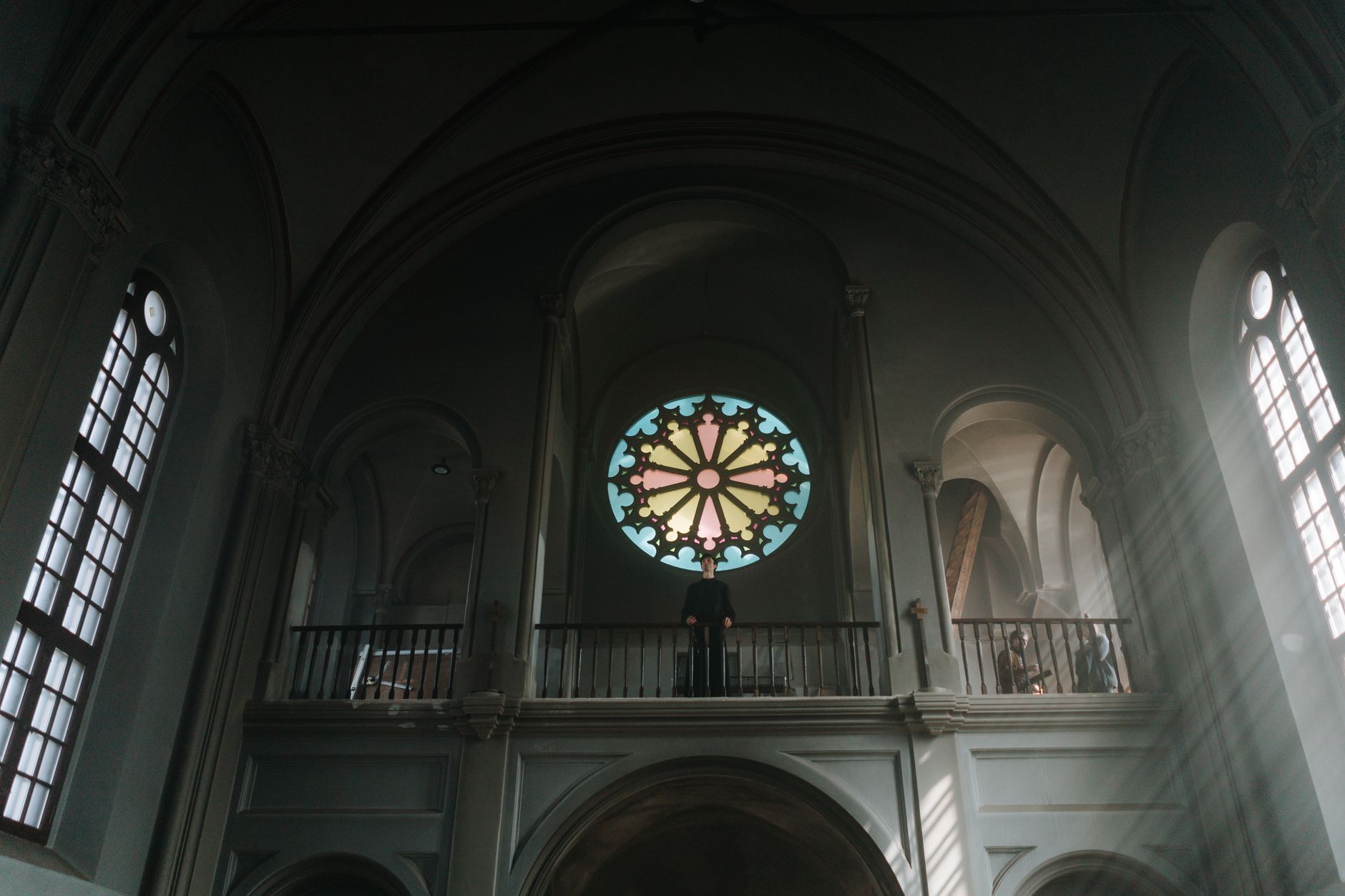
Visually, Fading Echo leans into a muted palette — dusty blues, faded yellows, the gray of old linoleum. The art style isn’t photorealistic, but it’s deeply evocative. Think watercolor textures blended with soft 3D modeling, giving the world a dreamlike quality, as if you’re seeing it through the lens of nostalgia itself.
Lighting plays a huge role. Sunlight slicing through half-closed blinds casts long shadows that feel symbolic. A single lamp left on in an empty room becomes a beacon of absence. Even the way dust motes float in a sunbeam feels intentional — a reminder that time keeps moving, even when we’ve stopped.
There are moments when the game almost feels like an interactive painting. You’ll pause not because you’re stuck, but because you want to just sit with the image for a while — a child’s shoe by the door, a half-knitted scarf on the couch, a calendar frozen on a date from years ago. These aren’t just set dressing; they’re emotional anchors.
A Short but Meaningful Journey
At roughly three to four hours in length, Fading Echo is a brief experience. Some might wish for more gameplay depth or additional chapters. But its brevity is part of its power. Like a well-crafted short story or a poignant photograph, it knows when to stop. It doesn’t overstay its welcome or dilute its message with filler.
That said, the game does leave a few threads slightly unresolved — not in a frustrating way, but in a way that feels true to life. We rarely get neat endings when dealing with grief and memory. Sometimes, all we get is the echo of what was, and the courage to keep walking anyway.
Final Thoughts
Fading Echo isn’t trying to be the biggest game of the year. It doesn’t need to be. It’s a quiet achievement — a reminder that games can be gentle, introspective, and deeply human. If you’re looking for adrenaline, look elsewhere. But if you’ve ever wanted to play something that feels like a long conversation with an old friend, or like flipping through a photo album on a rainy afternoon, this is it.
It’s not perfect. A bit more polish in puzzle clarity and a touch more variety in environmental interaction would elevate it further. But even as it stands, Fading Echo is a remarkable piece of interactive storytelling — one that understands that sometimes, the most powerful stories aren’t told with words, but with the spaces between them.
If you appreciate games that trust your intelligence and your emotions, give Fading Echo a try. Play it in the dark, with headphones on, and let it stay with you a little longer than expected. You might just find yourself listening for echoes in your own home afterward.